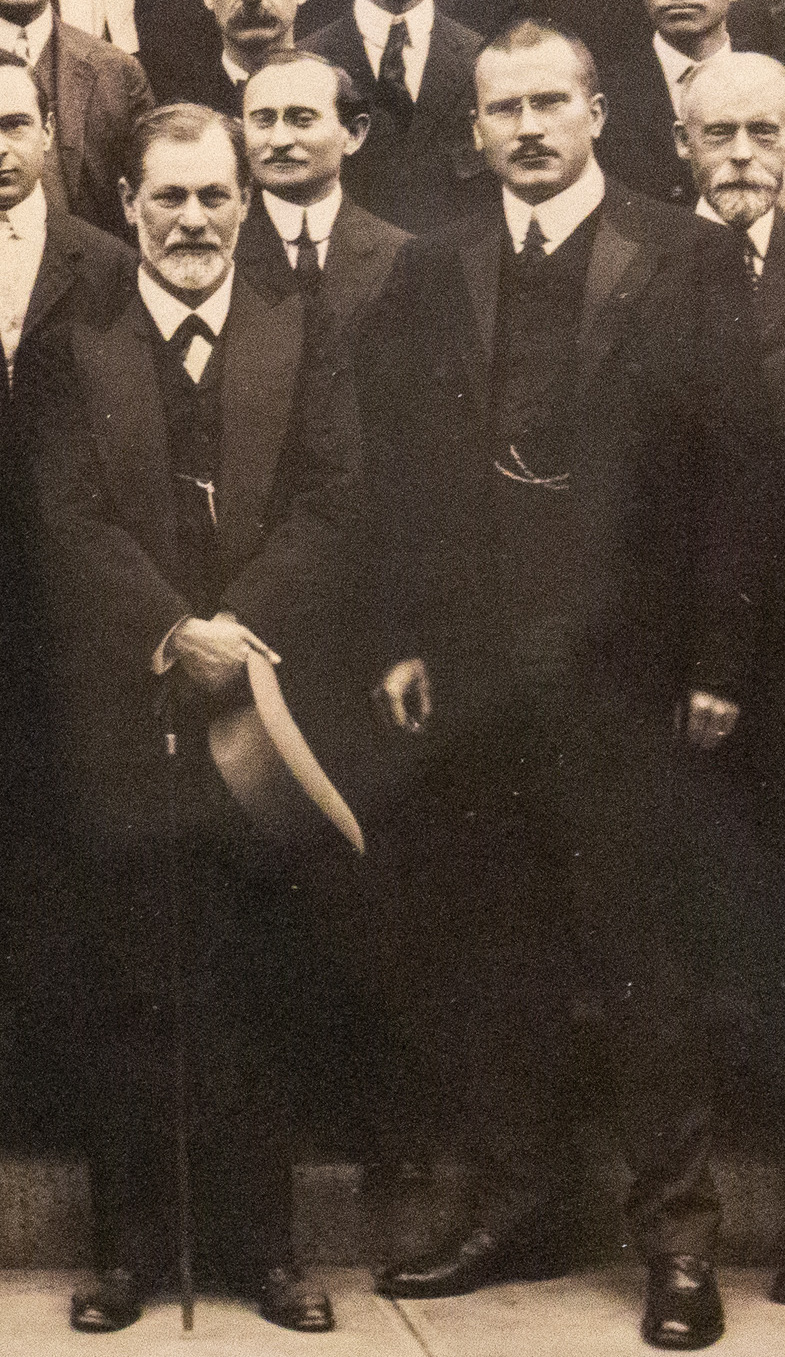
On 26 July 1875, in the Swiss village of Kesswil, Carl Gustav Jung was born. The son of a Protestant pastor, he became the psychiatrist who dared to take seriously what the science of his day dismissed as superstition: dreams, myths, alchemy, the I Ching, the tarot.
For Jung, the images of the ancient divinatory arts were not nonsense but "archetypes": universal figures of the collective unconscious that speak to every human being. With his concept of "synchronicity" — the meaningful coincidence that has no cause yet carries sense — he gave divination its first modern psychological frame: when we question the cards, he suggested, it is the soul that answers.
The bridge between worlds
His Red Book, kept secret for nearly a century, revealed how deeply Jung himself had explored his own visions. Today every tarot reading conducted with psychological seriousness — as a mirror of the inner life, not a fairground fortune — walks across the bridge this man built between science and mystery.