
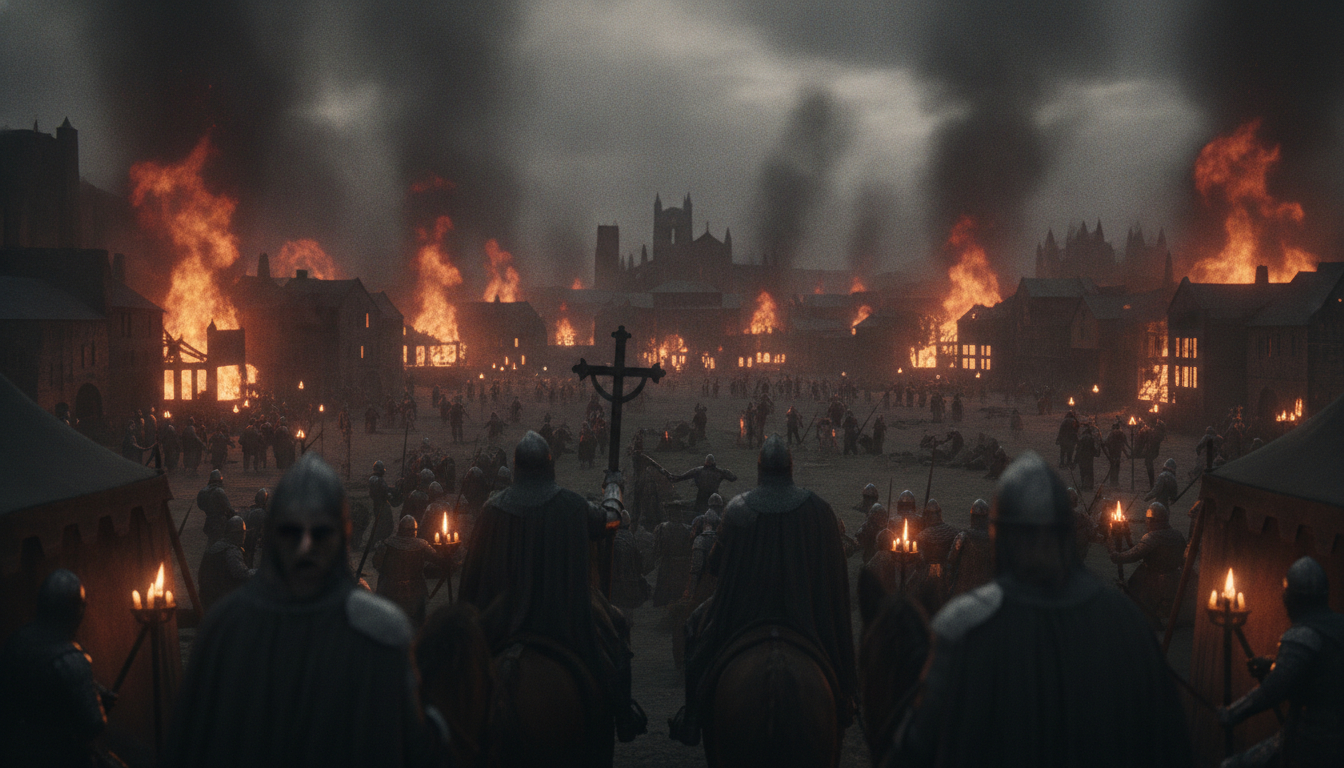
The Cathars of southern France believed in two principles — light and darkness — and in a poor church of black-robed "perfects" who refused oaths and violence. Rome declared them heretics; when preaching failed, Pope Innocent III proclaimed a crusade against them in the heart of Christian Europe.
On 22 July 1209 the crusader army arrived before Béziers. The citizens were asked to hand over the heretics; they refused. In the sack that followed, the city was annihilated. To that day the chronicle of Caesarius of Heisterbach ties the most chilling phrase of the Middle Ages, attributed to the papal legate Arnaud Amaury: "Kill them all, God will know His own."
The memory of the "good men"
The Albigensian Crusade lasted twenty years and ended with the pyres of Montségur. But the Cathars never left the imagination: they became Europe's great esoteric myth, woven into legends of the Grail and hidden treasures. Béziers remains a warning of what happens when power decides that a different faith has no right to exist.