Oracle & Instant Support
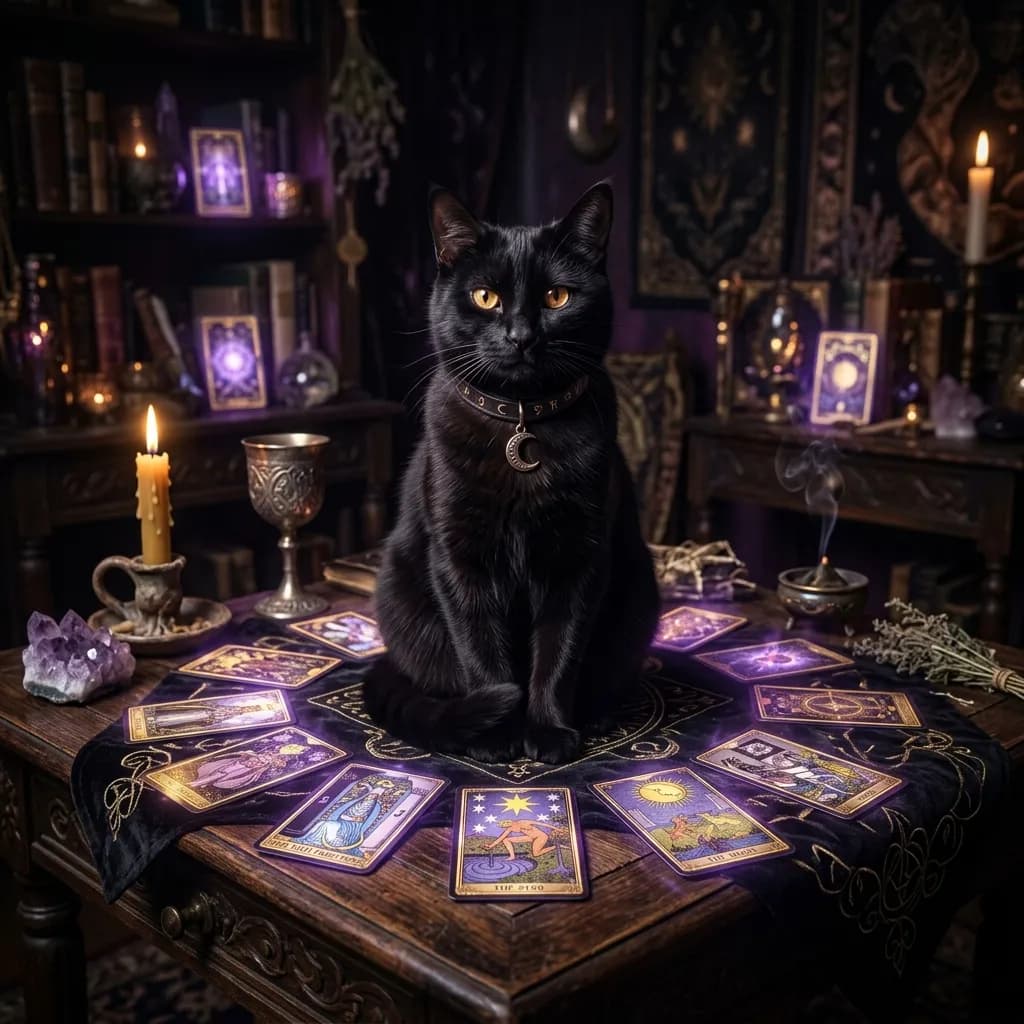
Welcome to the world of Tarot. For more than five centuries these seventy-eight cards have accompanied those seeking answers — not as an oracle dictating the future, but as a mirror reflecting what moves within and around us. Learning to read them requires no extraordinary gift: it takes patience, daily practice, and the willingness to listen to your own intuition.
This guide gathers the essential first steps: choosing a deck, cleansing it, understanding the structure of the Arcana, laying out your first spread, and avoiding the most common beginner mistakes. All you need is a deck, a notebook, and a little silence.
There is an old belief that your first deck must be gifted to you. It is a charming tradition, but not a rule: you can absolutely choose the deck that calls to you. Look at the artwork, hold the cards if you can, and notice which imagery resonates. The bond with your deck is the foundation of every reading.
For beginners, the Rider-Waite-Smith remains the most solid recommendation: every card, including the Minors, is illustrated with symbol-rich scenes, and nearly every book and course refers to it. Once you have absorbed the basic grammar, you can move on to the Tarot de Marseille or contemporary decks without getting lost.
A new deck — or one that has passed through many hands — carries energies that are not your own. Before using it, many traditions suggest cleansing it: pass the cards through incense or palo santo smoke, rest them on a cloth with a clear quartz crystal, or leave them overnight under the light of the Full Moon.
Consecration is simpler than it sounds: hold the deck in your hands, close your eyes, and silently declare the intention with which you will use it. From then on, keep it in a dedicated place — a box, a cloth pouch — and handle it with respect. The ritual is not for the cards: it is for you, to enter the right state of mind.
The twenty-two Major Arcana — from the Fool to the World — tell the great stages of the soul's journey: beginnings, trials, transformations, rebirths. When they appear in a reading, they signal that the question touches something deep and significant.
The fifty-six Minor Arcana are divided into four suits: Wands (fire, action and passion), Cups (water, emotions and bonds), Swords (air, thought and conflict) and Pentacles (earth, work and matter). They describe daily life, concrete situations, people. Do not try to memorise everything at once: learn one suit per week and let the images do the rest.
Forget the Celtic Cross and complex spreads for now. The three-card spread is the best teacher: shuffle while holding a clear question, cut the deck with your left hand, and lay three cards from left to right. The classic positions are past, present and future, but you can also read them as situation, obstacle and advice.
Before opening any book, look at the three images together: what story do they tell? Where are the figures looking? Which colours dominate? A reading is born from the dialogue between the cards, not from adding up dictionary meanings.
The habit that shapes a good reader more than any other is the card of the day. Each morning draw a single card, observe it for a minute, and write your first impressions in a notebook: sensations, memories, words that surface. Only afterwards compare what you wrote with the traditional meaning.
In the evening, reread your note and ask yourself where that energy showed up in your day. Within a few weeks you will have built a personal vocabulary made of your own associations: this — not memorisation — is the true foundation of intuition.
The first mistake is repeating the same question until the desired answer appears: the cards answer once, after that they only reflect your anxiety. The second is reading for yourself in moments of intense emotional involvement, when objectivity is nearly impossible. The third is fearing the "negative" cards: the Tower, Death or the Ten of Swords speak of necessary transformations, not condemnations.
If a question touches you too closely to read it with a calm heart, that is precisely the moment to be accompanied: the masters of Obsidian Tarot read every day for those seeking an experienced, outside perspective on their situation.